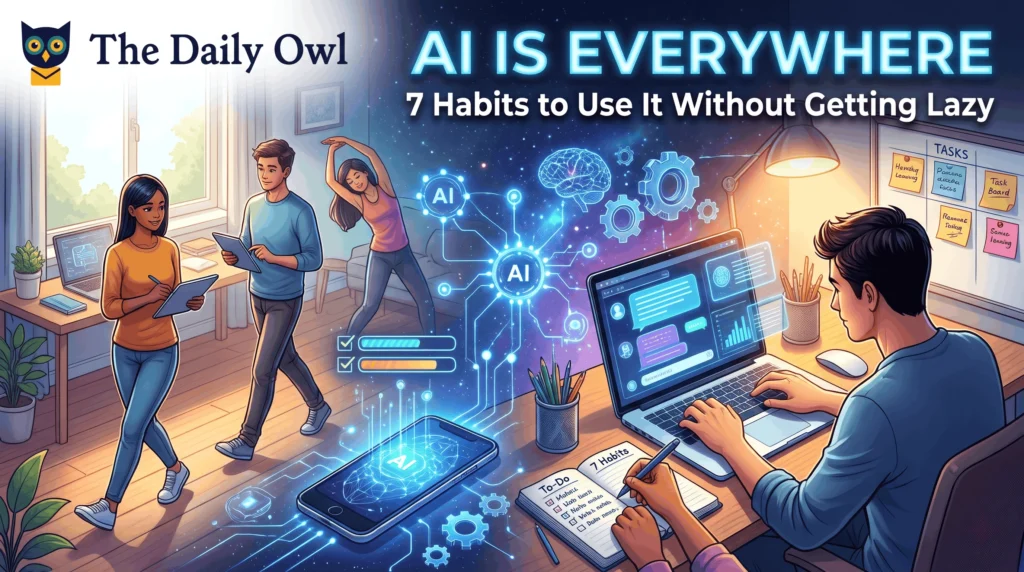
AI assistants now draft emails, explain physics and debug code. Used well, they save hours. Used carelessly, they can make us lazier thinkers and spread confident mistakes. These seven habits keep you in charge.
1. Treat the first answer as a draft
AI is excellent at producing a starting point. Your job is to shape it: cut the filler, add your own examples, and make sure it sounds like you.
2. Check anything that matters
Models can state wrong things in a very sure voice. For dates, numbers, quotes, medical, legal and money questions, confirm with a primary source before you rely on it.
3. Try first, then ask
When you are learning a skill, struggle for a few minutes before asking. That effort is what makes memory stick. Use AI to check your attempt rather than to replace it.
4. Ask for the other side
A simple prompt like “Give me the strongest argument against this” is one of the most useful things you can do. It helps you catch blind spots before someone else does.
5. Protect private information
Do not paste passwords, Aadhaar or PAN details, confidential client documents or other sensitive data into tools you do not fully trust. Read the privacy settings.
6. Keep the decision human
Let AI lay out options. Let people decide, especially when the choice affects someone’s health, job, money or reputation.
7. Be specific
Clear prompts get better results. Say who the audience is, what format you want, and what to avoid. Give an example of what good looks like.
The best use of AI is not to think less. It is to think about better questions.
Pick one habit and try it this week. You will probably find that the tool gets better when you do.