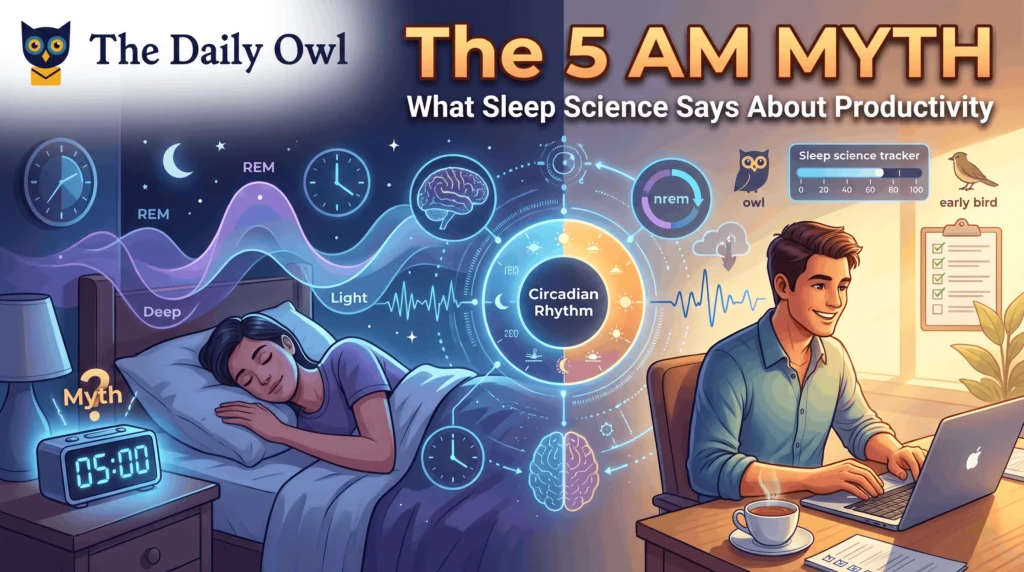
You have probably heard it: “Successful people wake up at 5 AM.” The idea is everywhere, and so is the guilt of people who cannot make it work. Here is what sleep science actually says.
Your body clock is partly inherited
People differ in their chronotype, a natural preference for being a morning lark or a night owl. Research suggests genetics plays a real role. Forcing an owl into a lark’s schedule often means cutting sleep, not gaining time.
Sleep matters more than the hour
Health bodies generally advise adults to get at least seven hours of sleep a night. Waking at 5 AM after five hours of sleep is not a productivity hack. It is a debt. Poor sleep affects memory, mood, focus and long-term health.
What the early risers actually do right
- They protect quiet time before others wake up.
- They go to bed early enough to be rested.
- They keep a consistent schedule, which is what the body likes most.
None of that requires 5 AM. It requires a routine that fits your life.
Try this instead
- Pick a consistent wake time and keep it within an hour, even on weekends.
- Find your best two hours for hard thinking and guard them from messages.
- Get daylight early. Morning light helps set your body clock.
- Cut caffeine after mid-afternoon and keep screens away from the bed.
- Do not copy a stranger. Run a two-week experiment and see what you feel like.
The best routine is the one you can keep on a bad Tuesday.
If you are always exhausted despite enough sleep, or you snore loudly or wake gasping, speak to a doctor. Persistent tiredness can have medical causes.