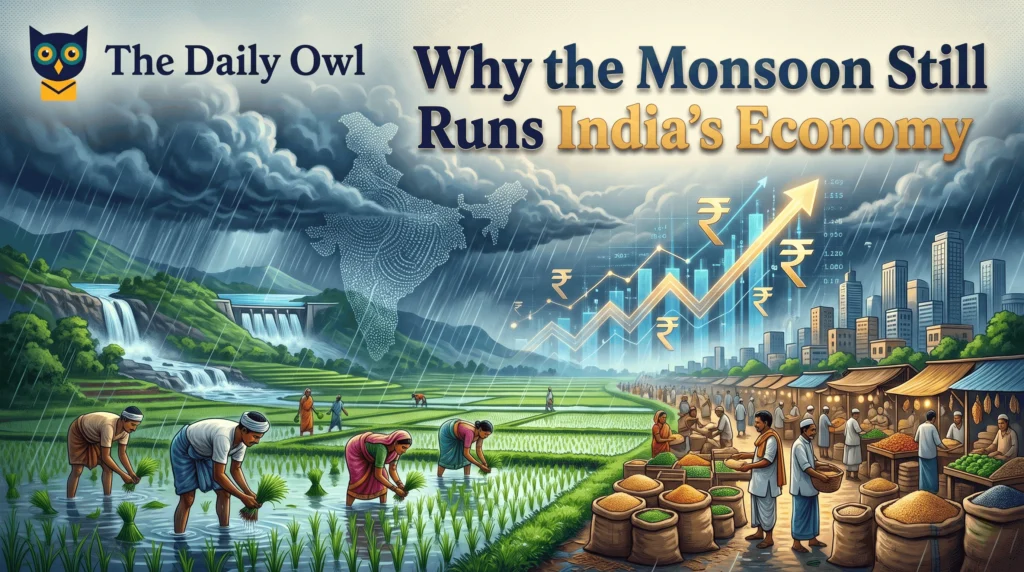
Every June, India watches the sky. The southwest monsoon, which usually reaches Kerala around 1 June and covers the whole country by early July, brings most of the year’s rain. It is also one of the most important economic events on the calendar.
Why it matters so much
Roughly 70 percent of India’s annual rainfall arrives between June and September. About half of the country’s farmland depends on rain rather than irrigation, so a good or bad monsoon shapes the harvest of rice, pulses, cotton and oilseeds.
It reaches beyond farms
- Food prices: A weak monsoon can push up vegetable and pulse prices.
- Rural demand: Farmers with good harvests spend more on tractors, motorbikes and appliances.
- Electricity: Rain fills reservoirs that supply hydropower and drinking water.
- Policy: The Reserve Bank and the government both watch the forecast when setting policy.
How it is forecast
The India Meteorological Department issues forecasts in April and updates them through the season. It looks at patterns like El Niño, which often (but not always) goes with weaker rainfall, and ocean temperatures in the Indian Ocean.
A changing pattern
Total rainfall may look normal while the pattern turns erratic: long dry spells followed by short, intense downpours. That means flash floods in some places and drought stress in others, even in the same season.
What you can do
Fix leaks, collect rainwater where you can, and support local water-recharge projects. For city dwellers, the monsoon is a reminder that the economy still rests on a very old natural system.
India does not just experience the monsoon. It plans its year around it.
Next June, notice how often the weather comes up in conversation. It is not small talk. It is a national budget meeting.